
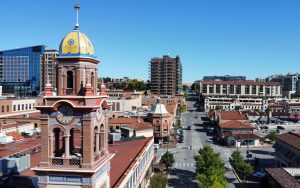
Something unusual is happening in Kansas City: Private capital is operating with institutional sophistication; but making decisions like locals. This dynamic is rare; while most American cities lost it decades ago when local families sold to Wall Street, Kansas City kept it.
In July 2024, the Country Club Plaza became the latest example.
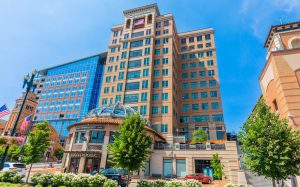
Gillon Property Group from Dallas owns the main Plaza property; the Price Brothers of Kansas City own significant Plaza real estate including Valencia Place; and Kansas City’s Block family owns 46 Penn, the Plaza’s newest office tower.
This family ownership matters beyond real estate. The Plaza isn’t our shopping center; it’s our city’s brand. Kansas City competes with cities like Austin, Nashville, Denver, and Charlotte. The Plaza is a century-old asset that can’t be replicated, bought, or built from scratch, even with unlimited capital. This is our differentiator.
THE REALITY
Luxury brands don’t evaluate charm, they count customers. Placer.ai, a foot traffic analytics platform, tracks mobile phone signals to measure visitors at retail locations across the country. Every major retailer uses it. They know what’s happening at the Plaza and at every competing shopping district. They compare the Plaza’s traffic to Highland Park Village in Dallas, the Domain in Austin, Santana Row in San Jose. The data impacts decisions on where to locate.
When Kansas Citians show up, we create the numbers that bring the retailers everyone wants.
Kansas City understands this. The Chiefs aren’t who they are because of Mahomes alone. They’re who they are because 76,000 people show up when it’s 12 degrees. The fans aren’t spectators. They’re participants. Third down gets loud because
people choose to be loud. That changes games. The Plaza works the same way.
These families can deploy capital, upgrade infrastructure, recruit Perch and J.H. & Sons, and the luxury brands that follow. What they cannot manufacture, at any price, is foot traffic.
Every visit creates data retailers use to make location decisions. Every purchase generates proof. Every person who chooses the Plaza instead of a screen is building the case that brings the next concept, the next restaurant, the next company that wants a Valencia Place address.
These families invest in the Plaza’s future. We invest by showing up. Not by obligation, by participation.
THE PREVIOUS MODEL
The previous Plaza owners, Highwoods and Macerich Taubman, were highly experienced, well-capitalized operators. They operated under the Wall Street model.
Where we buy groceries, where we work, in many cases where we live: much of it sits in our stock portfolio. Wall Street ownership is important to the growth of our country; often the only way big projects get done. They’re essential to real estate, but they think differently.
Wall Street follows the shortest path to profitability, optimizing for quarterly earnings; and you want Wall Street thinking that way because your portfolio benefits.
Family-owned real estate operates on a different clock. Long-term investments often pay substantial returns while improving the community. We need both. Real estate ownership isn’t philanthropy.
THE PRICE BROTHERS
The Price Brothers’ business has endured as long as the Plaza itself. A century of Kansas City commerce. They’ve been building Kansas City since before Woodrow Wilson left office. Four years before J.C. Nichols broke ground on the Plaza, the Price Brothers were already building high-quality housing, office buildings, and places for people to get their everyday needs. They’ve shaped how we live, just as the Nichols family did.
Price has owned Valencia Place, Lockton’s headquarters since 2000. The pattern holds: what appears as loss is succession. Each generation writes its chapter: Lockton wrote theirs; the next will write their own. Like the Plaza’s owners, Price will hold Valencia Place for generations.
THE BLOCK FAMILY
Kenny Block built 46 Penn without a single lease signed. A risk no institutional owner would take without signed leases. He lives here, He understands risk at a gut level that institutions reading feasibility studies never will. He built with quality, spending money he didn’t have to, knowing relationships would fill the building.
When he wanted Ocean Prime, not because restaurants are safe investments but to strengthen his neighborhood, he flew to Cameron Mitchell. When the restaurant hesitated, he and his investors became equity owners. They got their restaurant and KC got a new place to make memories. Family-owned businesses work differently.
GILLON PROPERTY GROUP
Gillon Property Group acquired the Plaza in July 2024. They’ll own it longer than J.C. Nichols Company, Highwoods, and Macerich Taubman combined. Multi-generational stewardship. Deep relationships with luxury brands.
Three families, three different approaches, one shared commitment to building for future generations of family members, not quarterly returns.
THE STRATEGY
After years of neglect, you don’t rebuild by chasing luxury brands first. Retailers want established traffic, not promises.
They are using a smarter strategy: family-owned retailers, regional concepts, independent restaurants. Rye, Perch, Better Cheddar, Prize Home + Garden, Vertice Italian: Kansas City entrepreneurs investing now, not after someone else de-risks it.
Two of the Plaza’s newest retailers signal where it’s heading. J.H. & Sons, the regional luxury menswear store, is the first high-end men’s retailer to commit to the Plaza in 30 years. Owner Jeff Halberstadts built his business on personal service and curated collections, the kind of specialty retail that disappeared when department stores dominated. Perch operates in only two other cities: Vail, Colorado and Naples, Florida. Both destinations for wealth. The Plaza is their third location, bringing the same discerning women’s boutique experience to Kansas City that defines those markets.
These aren’t regional concepts hedging their bets. They’re sophisticated retailers making deliberate choices about market positioning. J.H. & Sons sees Kansas City ready for the personal service and quality that luxury menswear demands. Perch is placing the Plaza alongside Vail and Naples, a statement about where they see the district in the national retail landscape. Together, they’re rebuilding the specialty retail mix the Plaza lost.
As the Plaza attracts the best family-owned and regional tenants, luxury brands take notice. Revitalized infrastructure, returning crowds, rediscovered identity: they come back.
Traffic is the foundation on which everything else is built. When Kansas Citians and visitors spend dollars at these businesses, the data improves, the case strengthens, and the next retailer becomes easier to recruit. Concepts expand, luxury brands follow, and restaurants return. It is a process that requires patience.
THE INFRASTRUCTURE REALITY
The Plaza isn’t a mall; it’s a town with century-old infrastructure. Below the street: Coolidge-era sewers, pre-Depression water lines, electrical systems designed before air conditioning. Unglamorous work that takes time and defines the next hundred years.
That work is underway. It impacts the speed at which new spaces can be filled. You can’t lease what isn’t ready. But when complete, new concepts will arrive that have never been to Kansas City, and those that exited stage right will return.
IMMEDIATE ACTION
Windows washed, sidewalks clean, fresh paint, upgraded lighting. Most importantly, a complete security overhaul executed in the first months, coordinating with other property owners, sharing information that never flowed before.
Safety shows up in statistics, but people feel it viscerally. People don’t check the crime reports before they get out of their car. They feel whether a place is safe the moment they arrive.
When things return to what they should have been all along, people forget quickly. But that doesn’t make the turnaround any less difficult. Changing direction mid-crisis, coordinating multiple owners, fixing years of accumulated neglect. That’s the work. Once it’s done, it looks like it was always that way. It wasn’t.
THE PARADOX
“They’re closing [insert beloved store]! The Plaza isn’t what it used to be.”
They’re right, it isn’t. Next year it won’t be what it is today. That’s not the problem, that’s the point.
Kansas Citians get stuck here because nostalgia lies. We mourn Houston’s. Before that, Bristol Seafood Grill. But we’re not mourning restaurants, we’re mourning ourselves. The movie on your first date with the person you married, the rabbits at Easter, Sunday brunch at the Magic Pan Creperie in Seville Square, anniversaries at Bristol, and Sunday traditions at Houston’s.
That’s not a shopping center, it’s where Kansas City keeps its memories.
The Plaza is branded into our collective conscience. Everyone carries their own version of what it should be, what needs changing, what the owners should do. Kansas City feels like they hold legal title.
Here’s the reality: Kansas Citians don’t hold legal title, these families do, and you want them to. Not for yourselves, but for the next generation. That’s the entire point. The clock ticks slower when you’re building for people who don’t exist yet. In physics, time moves differently depending on the observer’s frame of reference. The families operate in a different frame. Where Wall Street measures quarters, they measure generations. That changes what’s possible.
Plaza stewardship means honoring a community’s century-long relationship with a place that shaped their identity. The Plaza belongs to Kansas City in ways that transcend title. Smart ownership embraces that.
HISTORICAL PRECEDENT
The 1970s brought existential crisis. Indoor malls crushed traditional retail districts.
The Nichols Company made a decision as bold as J.C. Nichols’ original vision: complete reinvention. The 1977 flood became the catalyst. Rebuilding 77 damaged businesses. They weren’t restoring, they were reimagining.
Out: Everyday shopping. In: Gucci, Saks Fifth Avenue, Polo Ralph Lauren. The Plaza stopped being the place where you bought a dishpan; it became the place where you made a statement.
Similar outdoor districts became ghost towns, but The Plaza thrived.
DIFFICULT DECISIONS
Some Plaza buildings were purpose-built for retailers that no longer exist. Sears, Emery Bird Thayer, Bonwit Teller, Swanson’s, names most reading this have never heard. These structures were designed for a specific use at a specific moment in time. That moment has passed. The conversation isn’t about giving up on a building, it’s about elevating the Plaza’s historic identity by letting go of structures that no longer contribute to it. The Spanish-inspired architecture, the fountains, the courtyards. That’s what defines the Plaza. Replacing purpose-built retail shells with uses that honor that character doesn’t diminish the Plaza, it restores it.
WHAT RETAIL ACTUALLY IS
The Plaza is a continuous experiment. Like fashion, retail is ephemeral, constantly evolving; what works today won’t work tomorrow. The story isn’t any single tenant, not Sears or Saks, Bristol or Houston’s. The story is about turnover: constant churn, relentless evolution, letting go to make room for what’s next.
J.C. Nichols built a stage. For 100 years it’s hosted an ever-changing cast. We may not like every act, we may wish certain performers had longer runs, but demanding the 1985 lineup in perpetuity isn’t preservation, it’s taxidermy.
WHAT HAPPENS NEXT
The Price Brothers, The Block family, Gillon Property Group: Three families betting their capital on a premise others have walked away from. A patient investment in community infrastructure generates returns the next quarterly report can’t measure.
They’re recruiting Perch and J.H. & Sons, knowing that kind of retailer attracts more of the same. Price Brothers will find the next prestigious company to partner with at Valencia Place. Not a tenant, a like-minded partner that understands their address is a statement. Valencia Place carries the same cultural weight as the scoreboard at Arrowhead. You can’t manufacture that address, you can’t replicate that history, you choose it because it says something no other building in Kansas City can say.
Next time you’re buying something online, consider the Plaza instead. Not every purchase, that’s not practical; but some. Each visit generates data that drives retailer location decisions. Each dollar spent builds the case for the next concept, the next restaurant, the next company that wants a Valencia Place address.
The math is straightforward; the outcome isn’t guaranteed, but three families who think in generations are betting it works.
So are we.
By Tim Schaffer, AREA Real Estate Advisors